

On June 12, during the 25th EPOWER Expo, the Transformer Design and Manufacturing Technology Development Forum, hosted by the Transformer Branch of the China Electrical Equipment Industry Association, was successfully held at the Shanghai New International Expo Center. The event aimed to promote green, intelligent, and high-quality development of the transformer industry, encourage design innovation, upgrade manufacturing processes, and facilitate the application of new materials and equipment to meet the new demands of new energy grid integration, smart grid construction, and energy efficiency improvements. As a leading provider of intelligent manufacturing solutions in China, HGTECH’s Intelligent Manufacturing Division was invited to attend and delivered a keynote speech titled “Smart Transformation · Empowering — All-Scenario Solutions for Intelligent Transformer Factories.”
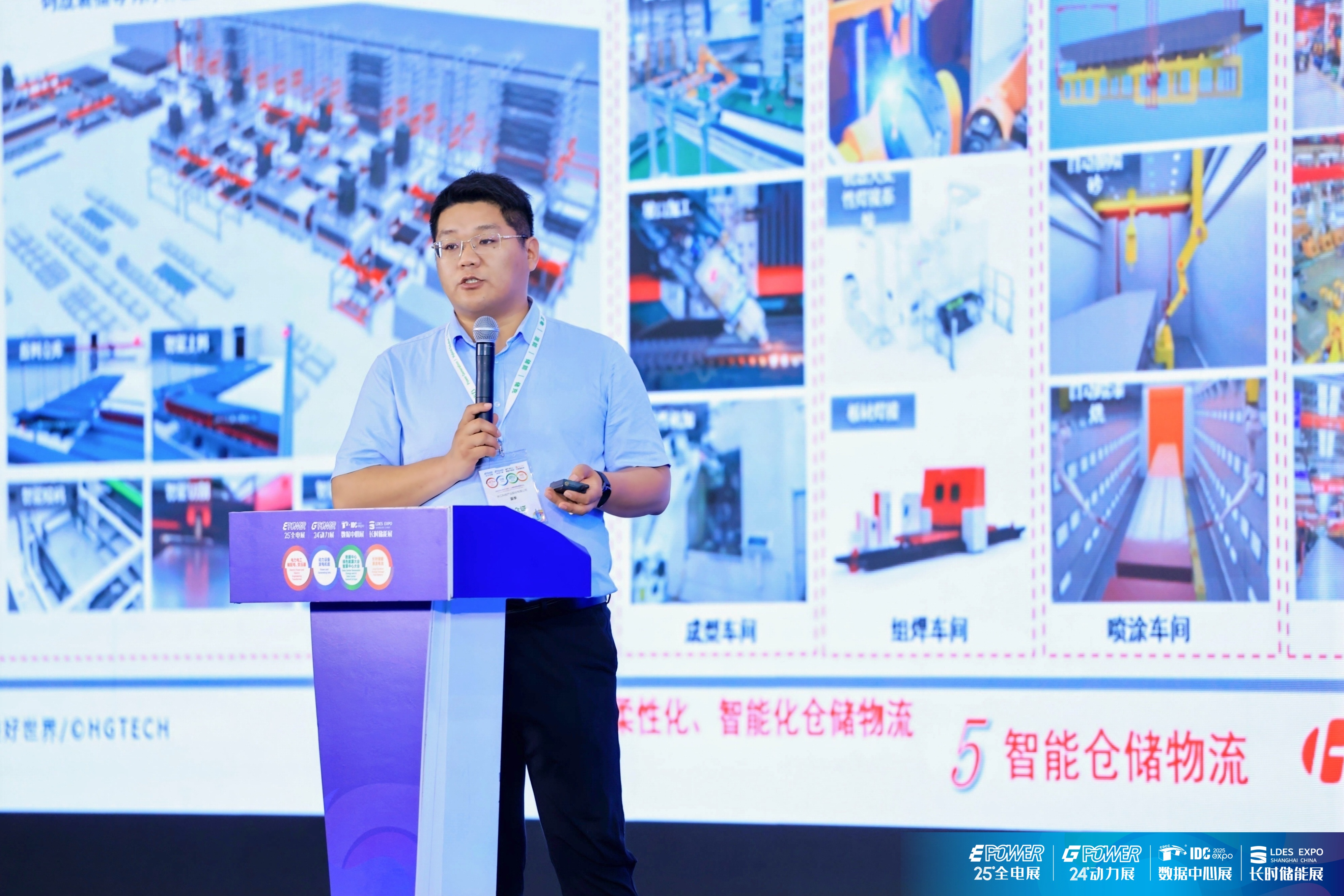
With changes in market demands, customized, small-batch, and multi-variety production modes have become the new normal in the power equipment manufacturing industry. Due to the complexity of production processes and manufacturing technologies, traditional enterprises in this sector often face major challenges such as high labor intensity, low production efficiency, poor quality control, and weak supply chain coordination, all of which seriously hinder project delivery and economic benefits.
To address these pain points, HGTECH’s Intelligent Manufacturing Division leveraged its strengths in intelligent equipment and next-generation information systems to create a fully integrated smart manufacturing solution covering cutting, forming, welding, coating, inspection, final assembly, and warehousing logistics — supporting enterprises in their green and intelligent transformation.
Key Technical Highlights of the Solution:
Intelligent Material Preparation: Independently developed technologies including intelligent mixed nesting, high-precision weak-feature recognition and positioning, flexible sorting and tray distribution, and AGV mixed-field scheduling to enable centralized cutting and ultra-flexible production of oil-immersed transformer tanks.
Smart Welding: Integrated self-developed teachless welding systems, where welding robots autonomously generate welding paths and identify seams without programming, significantly improving welding efficiency and consistency while solving issues like deformation and low productivity.
Flexible Assembly: By integrating automated warehousing, intelligent logistics, production line automation, and advanced digital management systems, a smart production process from component assembly to final product staging is achieved, improving assembly quality and efficiency.
Smart Warehousing: Maximizing warehouse space utilization with a 60% increase in storage density, integrated with AGV/RGV transport systems and WMS/WCS platforms for fully automated storage operations from inbound to outbound.
Digital Management: The HGTECH · Zhulong Manufacturing Operations Management Platform connects with upstream process design and material supply systems and integrates with equipment networks downstream, enabling full-process digital management across planning, production, scheduling, logistics, equipment, and quality. With the intelligent APS scheduling algorithm, scheduling efficiency improves by over 80%.
During the case study session, HGTECH’s Intelligent Manufacturing Division showcased smart workshop solutions designed for both dry-type and oil-immersed transformer manufacturers. One dry-type transformer smart factory project was highlighted, which integrated automated warehousing, smart logistics, production line automation, and digital deployment to achieve a streamlined process from component assembly to final product storage. The solution features automated production, intelligent storage and distribution, online inspection, virtual manufacturing, smart control, and intelligent decision-making.
In another case featuring a new energy oil-immersed transformer company, HGTECH highlighted its intelligent workshop for tank production. Through the deployment of smart cutting, welding, coating, and warehousing logistics, the entire oil tank production process was digitized and automated. The workshop’s daily capacity is expected to reach 30 units, with an automation rate exceeding 80% and equipment utilization above 85%, effectively resolving long-standing challenges such as low welding efficiency, difficult production planning, and poor information transparency.