

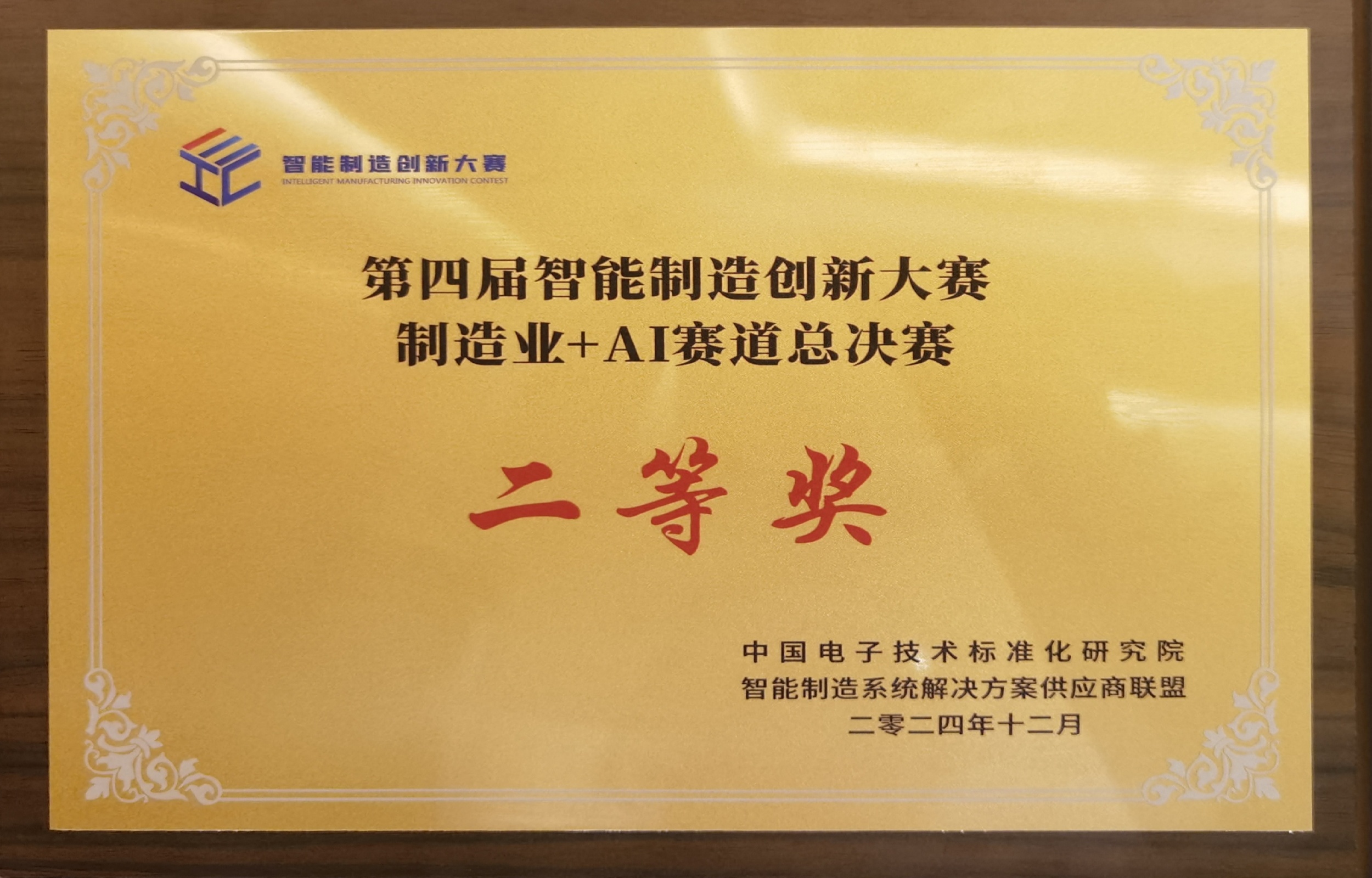
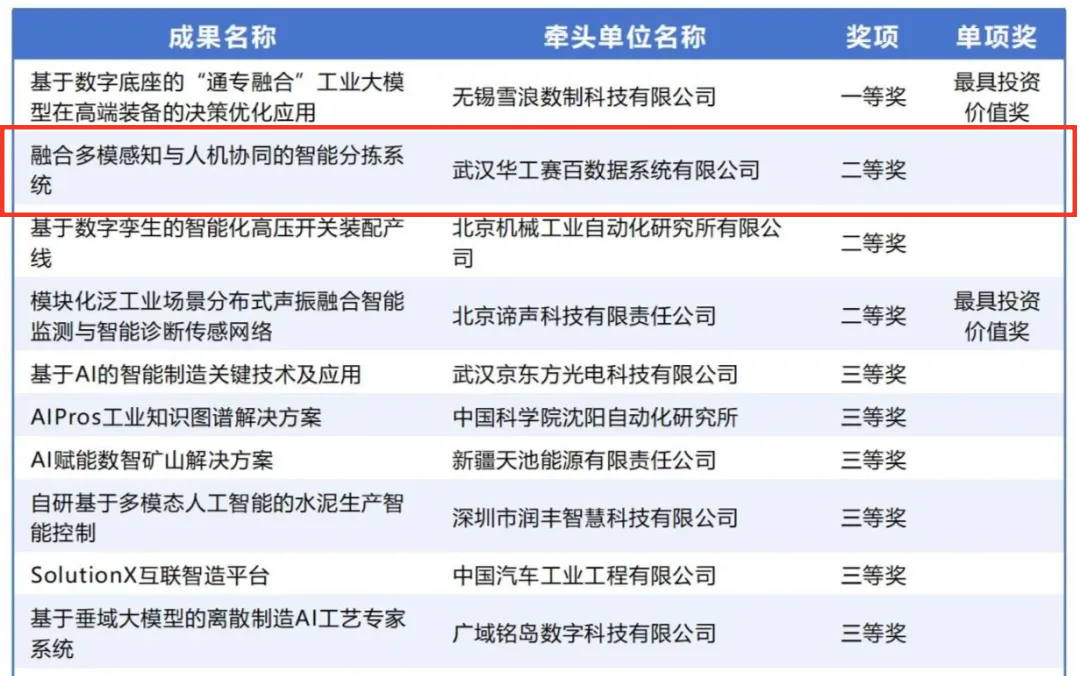
From December 10 to 11, the National Finals of the 4th Intelligent Manufacturing Innovation Competition (Manufacturing + AI Track) were held in Shenzhen. Since the launch of this year’s competition, over a hundred teams from across the country registered. After formal review and expert evaluation by the organizing committee, 30 teams were selected to enter the final round through a “roadshow + defense” format. After fierce competition, the joint team formed by Wuhan HGIT (Wuhan HGIT Data Systems Co., Ltd.) and Huazhong University of Science and Technology stood out with their project titled "Intelligent Sorting System Integrating Multi-Modal Perception and Human-Machine Collaboration", winning second prize.
Challenges in Sorting within Complex Industrial Environments:
In traditional manufacturing processes of national pillar industries such as shipbuilding and marine engineering, construction machinery, bridge/structural steel, and power equipment, sorting tasks are often done manually, resulting in low efficiency and high production costs. With the development of industrial technology, robots have gradually enabled automated sorting. However, large-scale, rapid deployment in complex environments still faces challenges: complex part characteristics, diverse types, environmental interference, weak generalization capabilities, and issues with interaction quality and safety. These factors limit the widespread application of intelligent sorting.
Intelligent Sorting System Solution:
HGIT, in collaboration with the School of Artificial Intelligence and Automation at Huazhong University of Science and Technology, developed an intelligent sorting system that integrates multi-modal perception and human-machine collaboration. The system aims to address the challenge of high-quality and efficient sorting of complex parts in open industrial settings. It uses multi-sensor fusion and a variety of visual algorithms to recognize complex parts of various types, shapes, and properties in real time. A multi-modal perception–decision analysis model enhances situational awareness and decision-making, and explores large model deployment in industrial sorting. The system also advances safe robotic control technology to improve interaction efficiency and safety. It has demonstrated efficient and flexible sorting in intelligent factory scenarios, meeting the demands of key economic sectors and national manufacturing development strategies.
The system has already been deployed in several large-scale smart factories for construction machinery and marine engineering, achieving intelligent material sorting. It boasts a recognition accuracy rate of ≥99% and a sorting success rate of ≥99%, supporting multi-modal perception sorting of over 10,000 parts. It allows dynamic addition of parts and adapts flexibly to different scenarios. Compared to manual sorting, the efficiency is doubled.
About the 4th Intelligent Manufacturing Innovation Competition:
The 4th Intelligent Manufacturing Innovation Competition is guided by the National Intelligent Manufacturing Committee and organized by the Intelligent Manufacturing System Solution Provider Alliance and the China Electronics Standardization Institute. The Manufacturing + AI Track focuses on deep AI applications in industrial fields, identifying outstanding solutions and application cases in areas such as factory design, product design, process planning, production operations, supply chain management, after-sales services, and business operations. It aims to drive breakthroughs in improving production efficiency, reducing costs, and enhancing innovation through AI technology.